Edinburgh Castle Amphitheatre: Materials
The proposed amphitheatre at Edinburgh Castle is still at an early stage in the design process, but it offers an exciting opportunity to improve how this part of the site relates to its remarkable historic setting.
The prospect of removing the existing semi-permanent steel structure is particularly positive. Replacing it with a carefully designed structure in local natural stone could create something far more appropriate to the material character of the Castle and Castlehill.
More detail and investigation will clearly be needed, including the stone source, construction, detailing and long-term weathering. However, the potential direction is obvious. Cannonball House, built in 1630 for Alexander Mure, a furrier and skinner, and other buildings at the top of Castlehill are likely to be constructed from the same, or closely related, local stone. Their rubble masonry has a richness and beauty that comes from its varied colours, textures and irregular stone sizes.
A new amphitheatre would not copy the historic buildings, instead, it could take inspiration from their solidity, texture and use of local materials. The accompanying photographs show the quality of the local buildings and stonework around Castlehill. They demonstrate why a natural-stone replacement could offer a more lasting and sympathetic addition to Edinburgh Castle than the current steel structure.
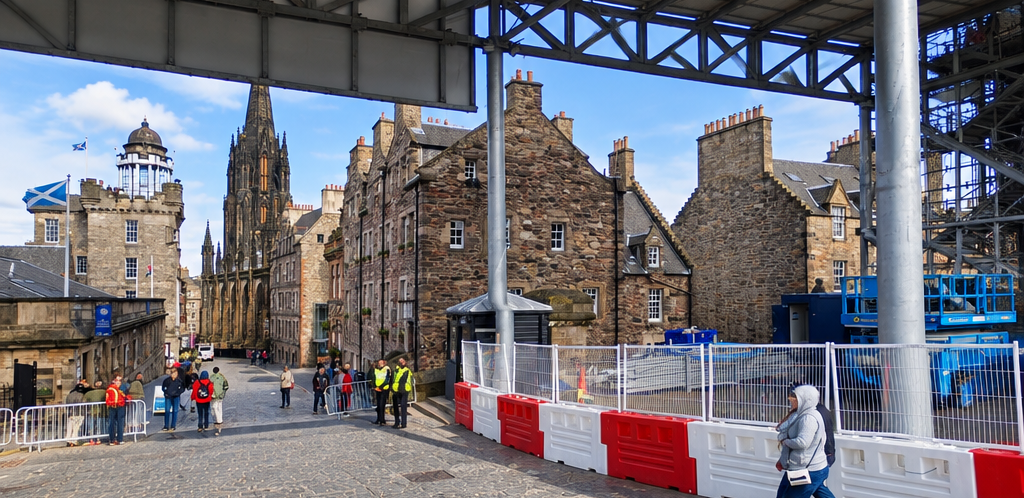
Castlehill: the existing steel structure contrasts with the historic stone setting.
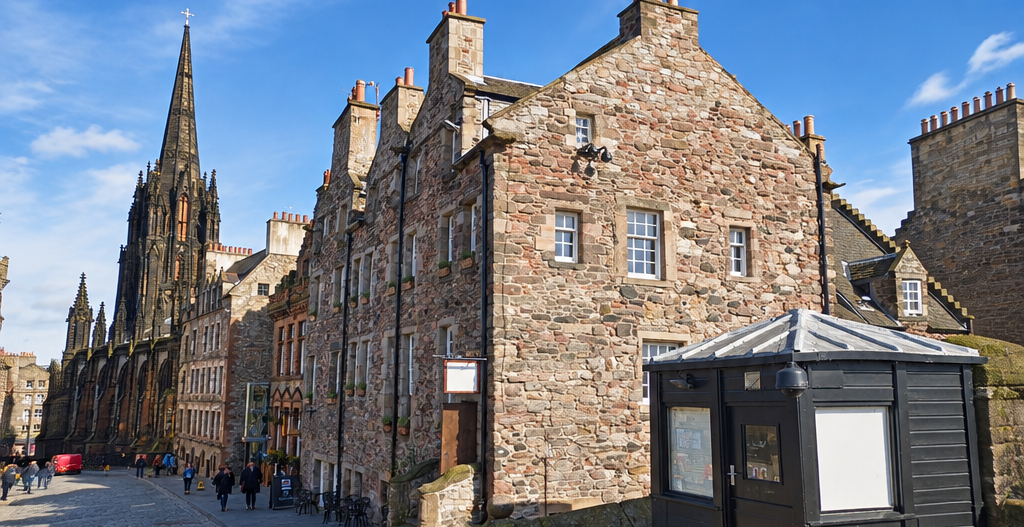
The varied texture, colour and scale of local rubble masonry around Castlehill.
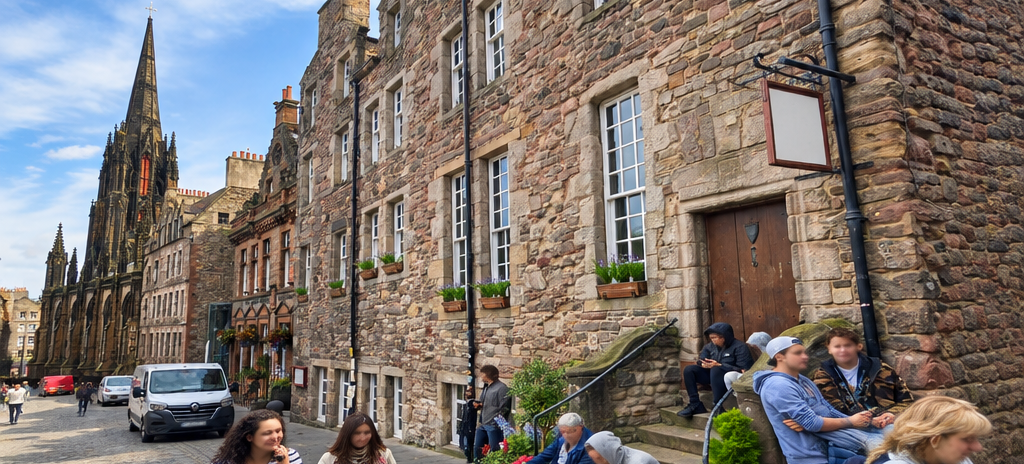
Cannonball House, highlighting the material character of the area.